If a pipe bursts, shut off the water at the main valve, open a faucet to drain the line, turn off the water heater, and call a plumber. If a drain backs up, stop using water in the house and call a plumber. Move belongings out of the way and photograph the damage.
Why it helps to know this before it happens
Pipes burst and drains back up at inconvenient moments. Michigan winters freeze pipes in outside walls, garages and crawlspaces, and spring storms can overload drains. In both cases, the first few minutes decide how much water ends up in your home.
Most of the steps are simple. The part that trips people up is finding the shutoff valve in a hurry. Read this guide once, find your valve today, and you will be calm and quick when it counts.
Know where your main water shutoff is
The main shutoff stops water to the whole house. Find it now.
- Look near where the water line enters the house, often in a basement, utility room or crawlspace, close to the water meter.
- Check the type. A round wheel handle turns clockwise to close. A lever handle closes when it sits across the pipe.
- Test it once a year. Valves that sit unused can stick.
- Label it with a tag so everyone in the household can find it.
Also find the shutoffs under sinks and behind toilets. Those stop water to a single fixture, which is enough for a small leak. Know where your water heater's shutoff valve is too.
If you cannot find or close the main valve, the municipal water supplier can shut off water at the street. Call your water utility for that.
Steps for a burst or leaking pipe
Act in this order.
- Shut off the main water valve. This stops the flow.
- Open a faucet at the lowest point and one at the highest to drain the pipes.
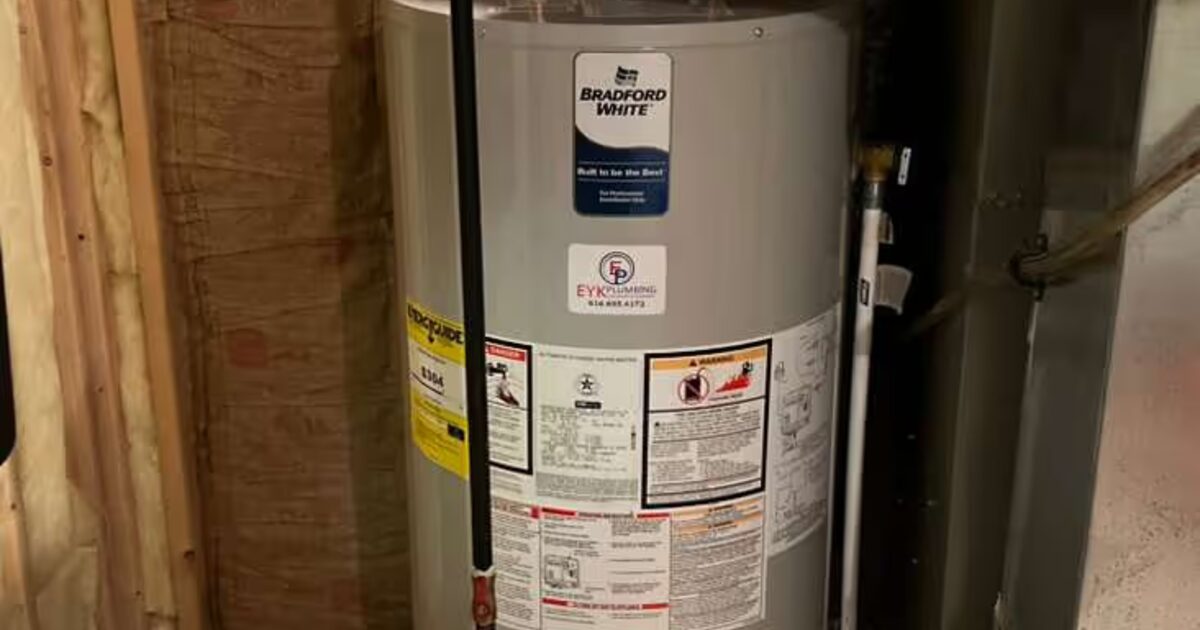
- Turn off the water heater. Switch off the breaker, or set a gas unit to pilot or off.
- Turn off power nearby if water reaches outlets and the breaker is dry. If not, leave and call for help.
- Move belongings out of the way. Lift furniture, rugs and boxes off the floor.
- Remove standing water with towels, a mop or a wet-dry vacuum as soon as it is safe.
- Photograph the damage for your records, before and after cleanup.
- Call a plumber to repair the pipe.
Do not use heat or open flame to thaw frozen pipes. Do not leave a space heater running unattended near wet areas.
If a pipe is frozen but has not burst
A frozen pipe is a warning. It can burst as it thaws.
- Shut off the water to that section, or the main valve if you cannot tell which section is affected.
- Open the nearest faucet so water has a way out as the ice melts.
- Warm the area gently, with a hair dryer on low, a heating pad or by raising the room temperature.
- Check for leaks once the water flows again.
- Call a plumber if the pipe is bulging, cracked or still frozen.
Pipes in outside walls, unheated garages and crawlspaces freeze first. Insulate them before winter, keep heat on in cold spells, and let a faucet drip during extreme cold if you know a pipe is at risk.
What to do when a drain backs up
A backup is different. The problem is waste water, not clean supply, so the safety steps are different.
- Stop using water. No flushing, showering, dishwasher or washing machine. Every drop you add has nowhere to go.
- Look at where it shows up. One fixture points to a local clog. Several fixtures point to the main line.
- Do not use chemical cleaners on a main-line backup. They will not reach the blockage and make the water hazardous.
- Keep children and pets away. Backed-up drain water can carry bacteria.
- Protect the area. Lift belongings, put towels around the drain and wear rubber gloves and boots if you must handle anything.
- Photograph the damage.
- Call a plumber to find the blockage.
For a single slow sink or toilet, a plunger may clear it. For anything involving several drains, a floor drain or repeat backups, call a plumber rather than push it.
Why drains back up
Understanding the cause helps you decide what to do next.
- A clog in a branch line affects one fixture.
- A clog in the main line affects several fixtures, usually the lowest first, such as a basement floor drain.
- Roots, a cracked pipe or a collapsed section cause repeat backups that snaking does not fix for long.
- Heavy rain can overload lines and expose weak spots.
- Hard water scale and grease narrow pipes over time.
If it happens once and clears, it may have been a one-time clog. If it happens twice, ask for a camera inspection. The camera shows the inside of the line, so repair decisions rest on what is there, not on a guess.
Cleanup and what to tell your insurer
After the plumber stops the problem, deal with the water.
- Dry quickly. Water left in drywall, carpet and framing can cause mold. Fans and dehumidifiers help, and wet materials may need removal.
- Throw out porous items that touched sewage. Do not try to save them.
- Keep records. Photos, receipts and the plumber's invoice support a claim.
- Contact your insurer and ask what your policy covers. Burst pipe and sewer backup cover can differ.
If water has soaked walls or floors, a restoration company can assess drying. Ask your plumber to point out where the leak started, since that helps with the claim.
Preventing the next one
A few steps reduce the odds.
- Insulate exposed pipes in outside walls, garages and crawlspaces.
- Know where your main shutoff is and test it once a year.
- Replace braided washing machine hoses and old supply lines before they fail.
- Keep grease and wipes out of drains.
- Ask for a camera look if a drain has backed up before.
- Consider re-piping if old pipes keep springing leaks.
Older homes in Grand Rapids may have aging supply lines or drains. A plumber can inspect the pipes you have and tell you what is worth keeping.
When to call a plumber
Call a plumber for any burst or cracked pipe, any leak you cannot stop with a fixture shutoff, any backup that affects more than one fixture, and any sewage smell inside the house. Call your gas utility from outside if you smell gas. Call the fire department if water is near live electrical equipment and you cannot make it safe.
Need a Plumber in Grand Rapids? Eyk Plumbing Is Ready to Help
Once the water is off and the house is safe, a plumber can find the cause and fix it. Eyk Plumbing repairs leaks, pipes, faucets and fixtures, and re-pipes part or all of a home. Read about plumbing repair in Grand Rapids or drain cleaning in Grand Rapids if the problem is a backup.
Call Eyk Plumbing at (616) 655-4172 or contact us online and tell us what happened.