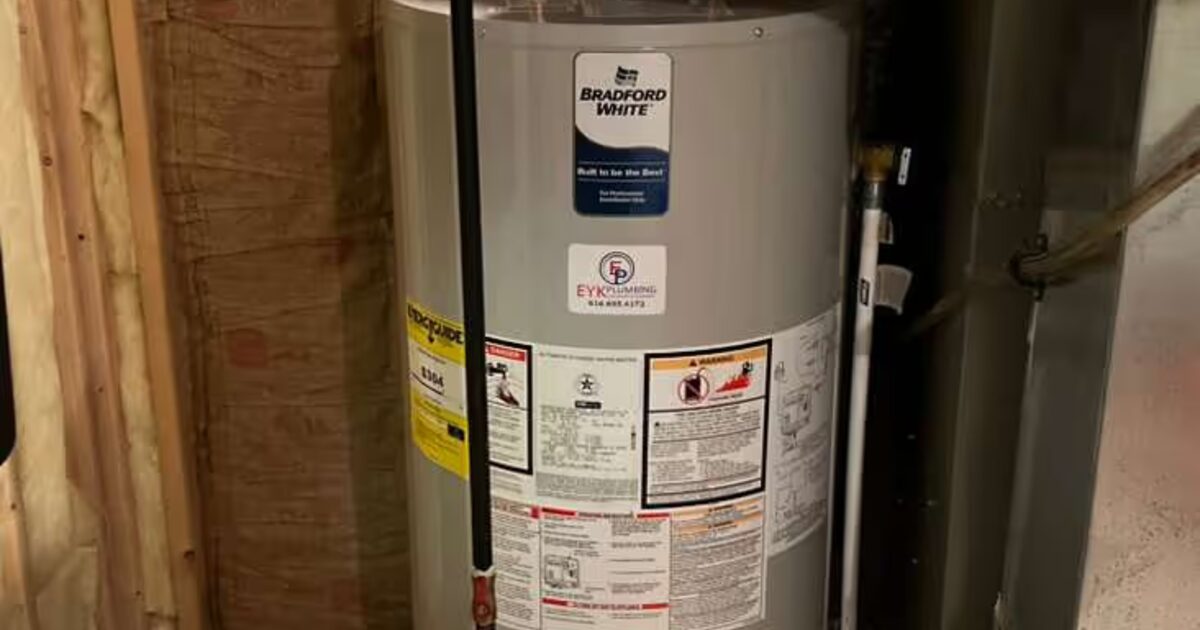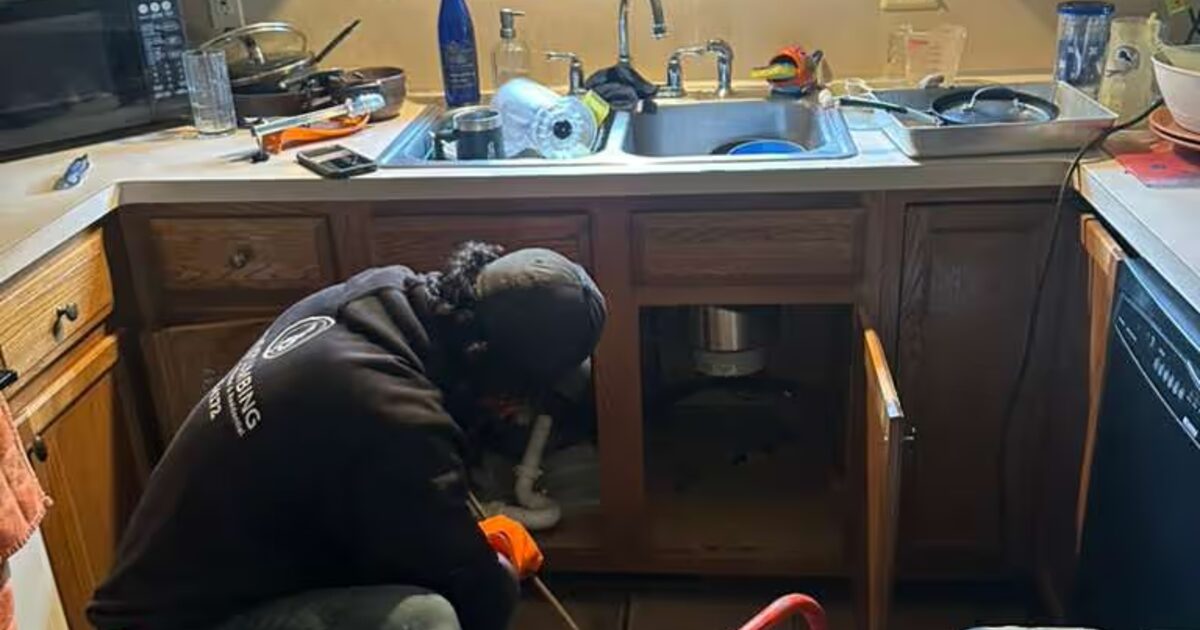
The cost of a new water heater in Grand Rapids depends on five things: the type of unit, its fuel, its size, the venting and piping it needs, and how easy it is to reach. A like-for-like tank swap costs least. A switch to tankless or a change of fuel costs more. Ask for the price in writing.
Why we do not quote a single number
You will find price ranges for water heaters all over the internet. Most of them mix very different jobs together. A small electric tank in an open basement and a tankless gas unit with new venting are both "a water heater replacement." They are not close in price.
Prices also change with the brand, the market and the season. We would rather not print a figure that is out of date by the time you read it. What we can do is explain what moves the price, so you can read any quote and ask the right questions. For a price on your own home, call us and describe your current unit.
The five things that set the price
Every quote you receive is built from the same parts. Knowing them makes quotes easy to compare.
1. Tank or tankless
A tank water heater stores heated water. It is the more familiar choice, costs less to buy and usually costs less to install.
A tankless water heater heats water only when you open a tap. It saves floor space and gives continuous hot water, but the unit costs more, and the install often involves more work. Gas tankless units usually need a larger gas line than a tank does and their own venting. Electric tankless units need a lot of electrical capacity.
Tankless units also need upkeep. West Michigan water is hard, and scale builds up inside the heat exchanger, so they need regular flushing.
2. Fuel type
Gas, propane and electric units are priced differently, and each needs different connections.
- Gas and propane units need venting and a gas connection that meets code.
- Electric units need the right circuit and breaker.
- Switching fuel adds work, such as a new gas line, venting or electrical capacity.
3. Size
A larger tank costs more to buy and takes more effort to move into place. Sizing depends on how many people live in the house, how many bathrooms you have and how you use hot water. A unit that is too small runs out. One that is too large costs more than it needs to and wastes energy.
For tankless units, size is about flow rate: how many gallons per minute the unit can heat at once. In winter, incoming water is colder, so the same unit delivers less hot water per minute. A good installer sizes for January, not July.
4. Venting, piping and code updates
The old unit may sit on connections that no longer meet current practice. Common updates include:
- new shutoff valves,
- a drain pan or a corrected relief valve pipe,
- an expansion tank where one is needed,
- replacing corroded or undersized venting, and
- new flexible connectors.
Some of these are small. Some are not. A good quote lists them so there are no surprises on the day of the work.
5. Access
A unit in an open basement with a straight path is quick to swap. A unit in a tight closet, an attic, or the bottom of a narrow stair takes longer to remove and replace. Labor time is part of the price.
Repair or replace: what that does to cost
Sometimes the cheapest answer is a repair. A failed thermostat, heating element, igniter or valve can often be replaced for much less than a new unit.
When a repair makes sense
A repair makes sense when the tank is sound, the unit is fairly new and the part is a small cost next to a replacement.
When replacement is the answer
A leak from the tank body is different. The steel has failed, and no repair fixes it. Past about 10 years, large repairs often cost more than they save, and the next failure is not far off.
Two questions to ask
Ask your plumber two questions: what exactly has failed, and what is the condition of the tank? If the answer is a part, a repair may be the economical path. If the answer is the tank, replacement is.
How to read a water heater quote
A good quote is specific. It tells you what you are buying and what is included. Look for these lines:
- the brand and model of the unit,
- the size or capacity,
- the fuel type and any fuel or venting changes,
- new valves, connectors and code updates,
- removal and disposal of the old unit,
- permit handling, if your city requires one, and
- any warranty terms the manufacturer provides.
If a quote leaves out items such as venting, valves or disposal, ask whether they are included. A low number that leaves them out can end up higher once they are added.
Compare quotes for the same job: same type, same size, same fuel. A tank quote and a tankless quote are not comparable, and neither are two quotes that assume different venting.
Why a very low quote deserves a second look
A price far below the others can mean a smaller unit than you need, a lower-grade model, skipped code updates or an install that leaves out work such as proper venting or a relief pipe. It can also mean the quote does not include disposal or the permit.
Ask what is in the price
None of that is certain, so ask. A reasonable plumber will explain what is in the price, line by line, and will not mind being asked to put it in writing. If the explanation is vague, that tells you something too.
Water heaters also fail in ways that cause damage. An incorrectly installed gas unit or a poorly vented one is a safety matter, not just a cost matter. The cheapest install is not a good deal if it has to be redone.
Tank or tankless: which costs more over time?
The up-front price of tankless is usually higher. Over time, savings depend on how much hot water you use and what you pay for fuel, so we do not promise a number. What we can say is this:
- Tankless units can last longer than tanks when flushed regularly.
- They free up floor space.
- They give continuous hot water, so large households do not run out.
- They cost more to buy and often more to install.
- In hard water areas they need regular flushing to stay efficient.
If you are replacing a tank that has served your household well, another tank is often the simplest path. If you want continuous hot water or the floor space, tankless is worth a conversation. We can explain what each would involve in your home.
Eyk Plumbing works with Bradford White, Rheem and Navien. Bradford White and Rheem make tank models, and Navien is known for tankless units.
Things that can reduce future costs
A few habits help a unit last longer, and a longer life is a lower cost.
- Flush the tank once a year to remove sediment. This matters more with hard water.
- Treat hard water. A softener ahead of the heater reduces scale on the tank and elements.
- Check the relief valve and the area around the unit for moisture.
- Know the age of your unit. The date is on the label.
- Replace on your schedule. Planning a replacement costs less stress than a failure.
If you are unsure about your water, a water test shows hardness, iron and other readings. You can then decide whether a softener makes sense.
What to ask before you hire
Use this short list with any plumber:
- Is the quote for the exact unit and size you described?
- What does it include: venting, valves, disposal, permit?
- Who is licensed to do the work, and can you see the license number?
- What happens if something unexpected turns up once the old unit is out?
- How long will the job take, and when will the hot water be back?
Eyk Plumbing holds Master license 8113338 and plumbing contractor license 8004658. Those numbers are public, and you can use them when you check a plumber's credentials.
Need a Plumber in Grand Rapids? Eyk Plumbing Is Ready to Help
If you are weighing a repair against a replacement, or tank against tankless, we can look at your unit and explain the options. See our water heater services or read about water heater repair and replacement in Grand Rapids. If hard water is wearing out your heater, our page on water softener installation in Grand Rapids explains the fix.
Call Eyk Plumbing at (616) 655-4172 or contact us online and describe your current water heater.