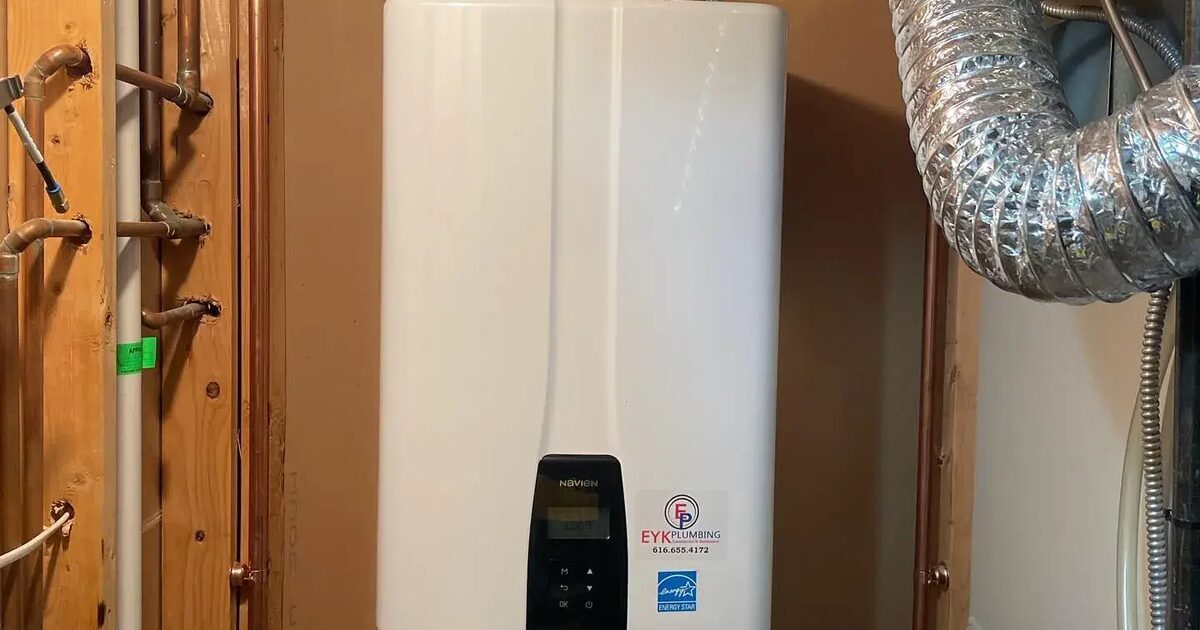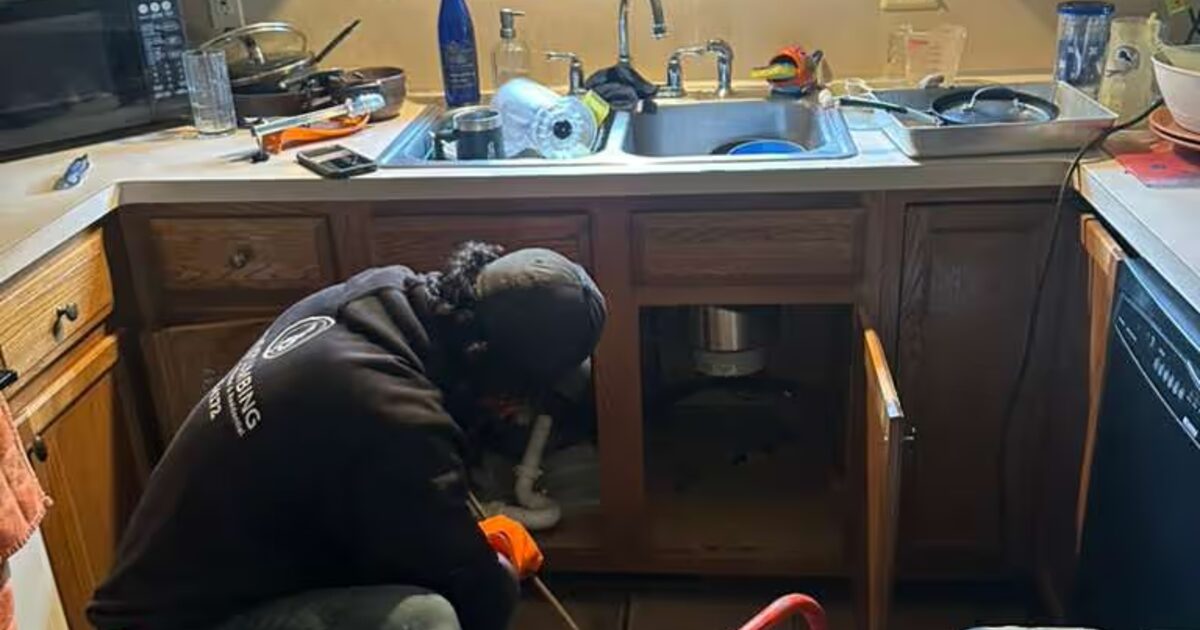
If your water heater leaks from the tank, runs out of hot water quickly, makes popping noises, or is more than 10 years old, it is likely near the end of its life. A leak from the tank body means replacement. Smaller problems, such as one failed part, can often be repaired. A plumber can tell you which applies.
Why a failing water heater is worth catching early
A water heater works every day, so it wears out in small steps. Most homeowners notice only the last step: a puddle on the basement floor or a shower that runs cold halfway through.
Catching the early signs gives you choices. You can compare a repair with a replacement, pick a unit that fits your household, and book the work for a time that suits you. Waiting for a failure takes those choices away, and a tank that fails can release a lot of water into a finished basement or utility room.
What this guide covers
This guide covers the signs we look for, how to tell a repair from a replacement, and what Grand Rapids homes add to the picture: hard water and cold winters.
Eight signs your water heater is wearing out
Not every sign means the unit is finished, but several together usually do. Here is what to watch for.
- Water around the base of the tank. A leak from the tank itself cannot be patched. Steel that has corroded through stays corroded.
- Rust-colored hot water. If rust shows up in the hot water but not the cold, the inside of the tank is often corroding.
- Popping or rumbling noises. Sediment collects on the bottom of the tank. Water trapped under it boils and makes the noise.
- Hot water runs out too soon. Sediment takes up space meant for hot water. A failed element can do the same.
- Water temperature swings. A failing thermostat or element can make showers go from hot to lukewarm and back.
- Foul-smelling hot water. A rotten egg smell can point to bacteria in the tank.
- Lower hot water pressure. Mineral scale can narrow the tank outlet and the pipes leaving it.
- The unit is more than 10 years old. The label shows the age. Past 10 years, big repairs often cost more than they save.
What to check yourself
You can do three safe checks without tools. Look at the floor around the unit for moisture. Read the date on the label on the side of the tank. Run the hot tap for a minute and look at the color of the water in a clear glass.
Do not open the tank or work on gas or electrical connections yourself. If you see a leak, shut off the water supply to the heater, turn off the power or gas, and call a plumber.
Repair or replace: how to decide
The tank is the part that decides. A tank in good shape can live on after a part is replaced. A tank that has failed cannot.
Repair usually makes sense when:
- the unit is under about 8 years old,
- the tank is not leaking,
- a single part such as a thermostat, heating element, valve or igniter has failed, and
- the repair costs a small fraction of a new unit.
Replacement usually makes sense when:
- water leaks from the tank body,
- the unit is more than 10 years old,
- repairs keep returning, or
- the hot water no longer keeps up with your household.
A fair plumber will explain which side you are on and show you what they found. At Eyk Plumbing we check the tank, the venting, the water connections and the gas or electric supply before we recommend anything. If the tank is sound, we say so and repair it. If it is not, we explain why and go through the replacement options.
How hard water and Michigan winters wear out a tank
Hard water
West Michigan water is hard. It carries calcium and magnesium, and those minerals drop out of the water as it heats. They form scale on heating elements and a layer of sediment on the bottom of the tank.
That layer makes the unit work harder to heat the same water. It causes the rumbling noise. Over time it shortens the life of the heater. A water softener ahead of the heater reduces this, and a yearly flush of the tank helps remove sediment before it hardens.
Cold winters
Winter adds a second load. Incoming water is much colder in January than in July, so the unit runs longer to reach the same temperature. Tankless units are affected too: when incoming water is cold, they deliver less hot water per minute, so sizing for winter matters. Many old tanks give out in the cold months because they are working at their hardest.
Private wells
If you are on a private well, the effect can be stronger. Well water often carries iron and sediment as well as hardness. A water test shows what is in your supply, and we can explain the results and what to do about them.
What replacement involves
A replacement starts with a look at your current setup. We note the fuel type, the size, the venting, the location and how much hot water your household uses. Then we talk through the options.
Tank or tankless
A tank stores heated water and is the more familiar choice. A tankless unit heats water as you use it and takes up less floor space. Tankless units usually cost more to buy and install, and they need the right gas supply or electrical capacity plus venting. Hard water scales them up, so they need regular flushing.
Brands
Eyk Plumbing works with Bradford White, Rheem and Navien. Bradford White and Rheem make tank models, and Navien is known for tankless units.
Size
A unit that is too small runs out of hot water. One that is too large wastes energy. We size it to the number of people in the house, the number of bathrooms and your habits.
Fuel and venting
Gas units need proper venting and a gas connection. Electric units need the right circuit. Switching fuel is possible but needs planning.
On the day
On the day of the work, we shut off the water and fuel, drain and remove the old unit, connect the new one, fill it, check for leaks and test the controls. We show you where the shutoffs are before we leave.
Permits
Permit rules for water heater replacement depend on your city and township and can change. Check with your local building department before the work, or ask us what the job involves so you know what to ask.
When to call a plumber
Call a plumber if you see water around the tank. Call too if the hot water has changed color or smell, if the unit is noisy, or if the tank is past 10 years old and showing any sign above. Call right away if there is a gas smell. Leave the house and call your gas utility from outside.
Early calls cost less than failures. A plumber who sees the unit before it leaks can often give you time to plan.
Need a Plumber in Grand Rapids? Eyk Plumbing Is Ready to Help
If your water heater is showing any of these signs, talk to a plumber before it fails. Eyk Plumbing repairs, replaces and installs tank and tankless water heaters across Grand Rapids and nearby towns. Learn more about water heater repair and replacement in Grand Rapids or see all of our water heater services.
Call Eyk Plumbing at (616) 655-4172 or contact us online to talk through what you are seeing.