The cost of a water softener in Grand Rapids depends on five things: the type of system, its size, how hard your water is, how easily it connects to your plumbing, and what it costs to run each year. A single-tank softener sized for a typical household costs least. Dual-tank units, larger systems and installs that need new piping or a drain cost more.
Why we do not print one price
Softener prices online swing widely, because they mix very different jobs together. A small unit dropped in next to an existing bypass loop is a short job. A large dual-tank system in a finished basement, with new piping and a drain run, is not.
Prices also change with the brand and the season. Rather than print a number that will be out of date, we explain what moves the price so you can read any quote with confidence. For a price on your own home, call us and tell us how many people live there and whether you are on city water or a well.
How hard is Grand Rapids water?
City of Grand Rapids water is hard. The city's 2025 average water analysis for the Lake Michigan Filtration Plant puts the average hardness of plant tap water at 142 mg/L, or 8.3 grains per gallon. The U.S. Geological Survey classifies water from 121 to 180 mg/L as hard.
Many homes outside the city, in places like Cedar Springs, Sparta and Byron Center, draw from private wells instead. Well water hardness varies from one property to the next, and it can be much higher than city water. That is why we test the water at your tap before we suggest a size.
Hardness matters to cost because harder water uses up a softener's capacity faster. A household on hard well water may need a larger unit than a neighbor on city water, even with the same number of people.
The five things that set the price
1. System type
- Single-tank softeners suit most homes. They regenerate at a set time, usually overnight, when little water is in use.
- Dual-tank softeners keep soft water flowing while one tank regenerates. They cost more, and they suit larger households or homes that use water around the clock.
- Salt-free conditioners reduce scale buildup but do not remove hardness minerals. They cost differently and solve a narrower problem.
2. Size
A softener is sized by how much hardness it can remove between regenerations. More people, more bathrooms and harder water all call for more capacity. A unit that is too small regenerates constantly and wastes salt and water. One that is too large costs more to buy than it needs to.
3. Your water
A hardness reading sets the size. If the test also shows iron, sediment or other problems, the softener may need a filter alongside it. That changes the scope of the job and the total. Our page on water testing explains what a test checks.
4. The installation
Labor depends on your layout. The softener needs a connection to the main supply, a bypass valve so you can isolate it, a drain for the regeneration water and, ideally, a spot ahead of your water heater. A basement with the main line, the heater and a floor drain close together is the simplest case.
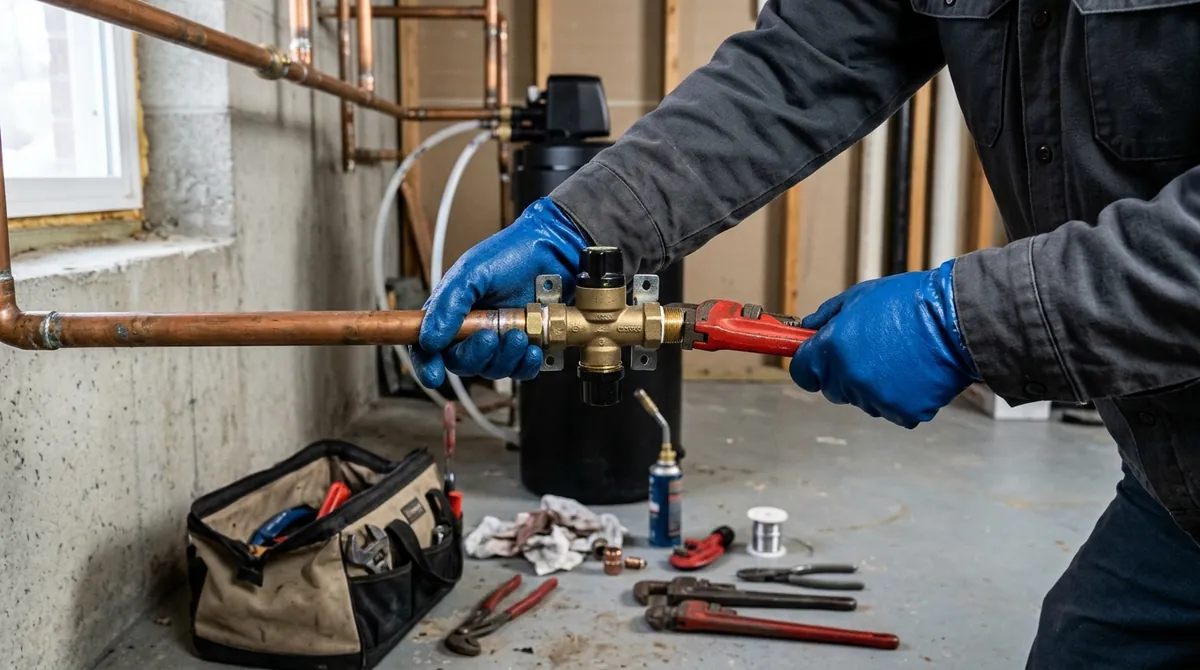
Costs rise when the line has to be rerouted, when the drain is far away, when the unit goes in a finished space, or when an old system has to be removed first.
5. Running costs
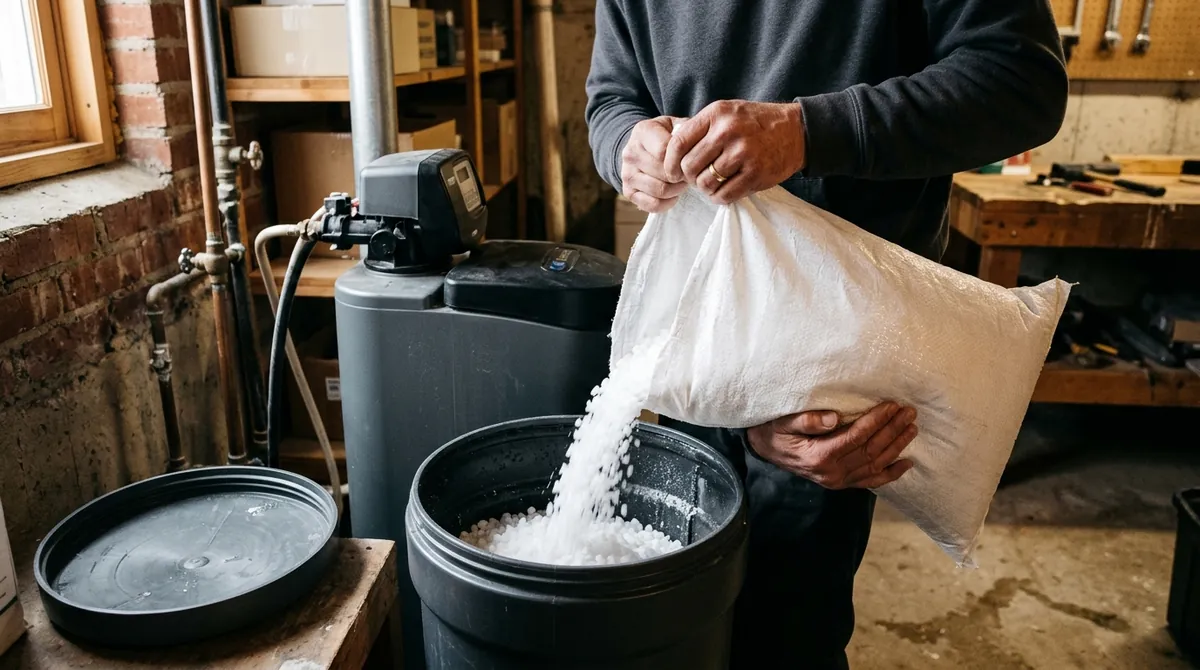
The purchase price is only part of the cost. A salt-based softener uses salt and some water every time it regenerates. Over the years it may need a resin change or a control valve repair. A unit sized and set correctly uses less of both.
What does a softener cost to run each year?
Running costs depend on your hardness, how much water you use and how the unit is set. Many households top up the salt every month or two. The softener also sends some water down the drain during each regeneration cycle.
Two things keep these costs down:
- Correct sizing. An undersized unit regenerates more often than it should.
- Correct settings. A softener set for a hardness level higher than your water uses more salt than it needs.
When we finish an install, we show you how to check the salt level and how to fill the brine tank, so the upkeep is simple.
What does hard water cost you without a softener?
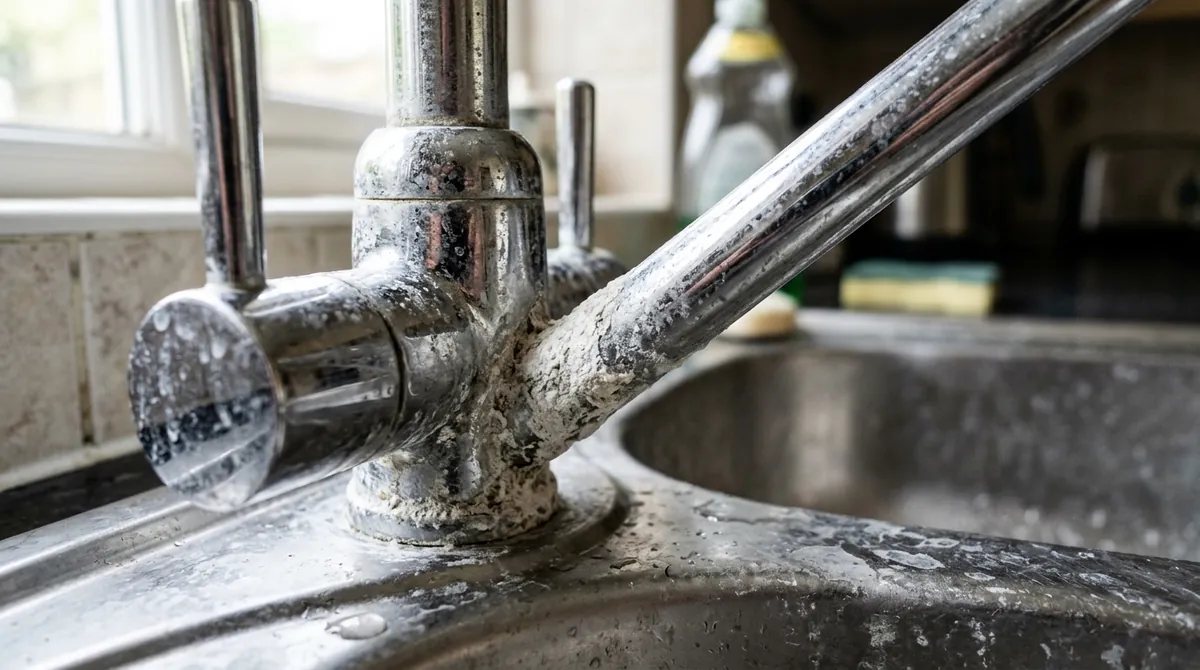
Hard water has its own costs, even if they are harder to see on a bill. Scale builds up inside pipes, on faucet aerators and on the heating surfaces of your water heater. Soap lathers poorly, so you use more of it. Dishes come out spotted and laundry feels stiff.
The water heater takes the biggest hit. Scale coats the bottom of the tank and the heating elements, so the unit works harder and wears out sooner. That is why we place the softener ahead of the heater. Our guide to the signs you need a new water heater covers what hard water does to a tank.
Hard water is not a health risk. Calcium and magnesium are safe to drink. The case for a softener is about protecting the house and the appliances in it.
Repair or replace an old softener?
If you already have a softener that is not keeping up, a repair may cost far less than a new unit. Regeneration failures, leaks and control valve faults are often fixable.
Replacement makes sense when the unit is old, the resin is worn out, parts are hard to find or the system was never sized for your household. When we look at an existing softener, we tell you which way we would go and why. If you call with the model and a description of what it is doing, we can often tell you the likely cause on the phone.
How to compare water softener quotes
A clear quote tells you what you are buying and what is included. Look for:
- the type of system and its capacity,
- the hardness reading the size is based on,
- the connection to your main line and the bypass valve,
- the drain connection for regeneration water,
- removal of the old unit, if there is one,
- whether a filter is included, and why, and
- what the startup and walk-through cover.
Compare like with like. A single-tank quote and a dual-tank quote are not the same job. A quote with no hardness reading behind it is a guess at the size.
Ask how the size was chosen
If one quote is far lower than the others, ask how the size was chosen. A smaller unit than your household needs will cost less up front and more in salt, water and frustration later.
Softener, filter or both?
A softener removes the calcium and magnesium behind hard water. A filter removes other things, such as sediment, chlorine and iron. They solve different problems. Many homes on city water only need a softener. Many homes on wells benefit from both.
If you are not sure, start with a water test. It costs little compared with buying the wrong equipment. Our page on water filtration systems explains when a filter makes sense.
How long does a water softener install take?
Installing a new softener usually takes 3 to 5 hours, depending on the layout and the drain. Replacing an old unit takes about the same, because the old system has to come out first. A repair or tune-up is often 1 to 2 hours.
The hardness test itself takes a few minutes on site, and we do it before we recommend a size. Your water is off for part of the install while we tie into the main line, so plan on a morning or an afternoon without running the dishwasher or the laundry.
Where the softener goes
The softener usually sits where the main water line enters the house, near the water heater and a floor drain. Outdoor taps are usually left on untreated water, since there is no reason to soften water for the lawn. We check your layout before we pick a spot, because the location affects both the labor and how well the softener protects the heater.
What to ask before you hire
- Did you test my water, and what was the hardness reading?
- Why this type and size for my household?
- Where will the softener go, and will it sit ahead of the water heater?
- What does the price include: bypass valve, drain, removal of the old unit?
- How much salt should I expect to use, and how do I refill it?
Eyk Plumbing holds Master license 8113338 and plumbing contractor license 8004658. You can use those numbers when you check a plumber's credentials.
Talk to Eyk Plumbing About a Water Softener
If scale, spotty dishes or a struggling water heater have you thinking about a softener, we can test your water and explain the options for your home. See our water softener installation services or read about water softener installation in Grand Rapids.
Call Eyk Plumbing at (616) 655-4172 or contact us online and tell us about your water.