If your Grand Rapids home has a lawn irrigation system with a testable backflow preventer, the city will ask you to send in a current-year test report once every five years, and only after it notifies you. The test must be done by an ASSE certified tester, usually takes under an hour per device, and costs least when the device passes the first time.
What a backflow preventer does
A backflow preventer is a one-way valve assembly on the water line that feeds your irrigation or fire sprinkler system. It lets clean water flow out to the sprinkler heads and stops it from flowing back the other way.
Backflow can happen when pressure in the city main drops, for example during a water main break or when a fire hydrant is opened nearby. Without a working preventer, water sitting in irrigation lines can be pulled back toward your drinking water. That water has been in contact with soil, lawn fertilizer and anything else around the sprinkler heads.
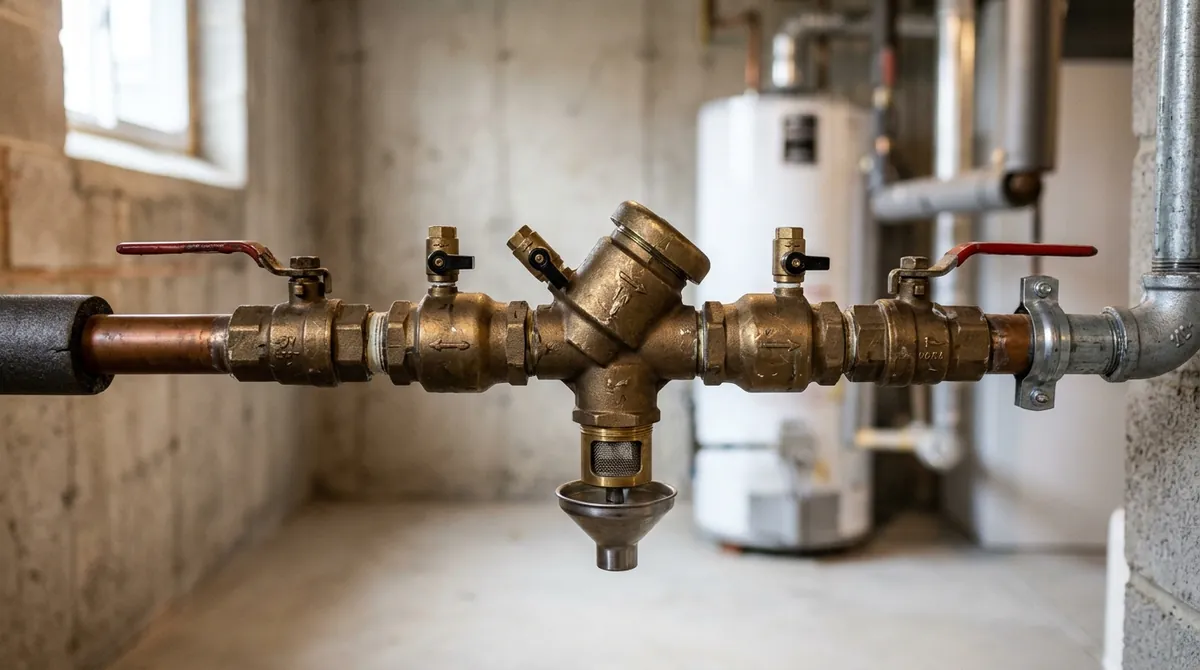
The device has springs, seals and check valves inside. They wear over time, and a worn part can let water through without any sign you would notice from the yard. That is why the device is tested with gauges rather than judged by eye.
How often Grand Rapids asks for a residential test
The City of Grand Rapids Water System says that one and two family residential customers with an irrigation system and a testable backflow preventer need to submit a current-year backflow test once every five years, upon notification from the Water System. Commercial, industrial and multi-family properties are on a shorter cycle.
The same city page also notes that the Michigan Plumbing Code calls for these devices to be tested annually. In practice, the five-year schedule is when the city asks you for a report. Testing more often than that is your choice, and it catches a worn part before the city's notice does.
The five-year option comes from the state rules for local cross connection programs. Michigan Administrative Code R 325.11404 requires testable preventers to be tested at least once every three years, but allows preventers on lawn irrigation systems with no chemical treatment to be tested once every five years when the local program says so.
Outside the city of Grand Rapids
Wyoming, Kentwood, Grandville, Walker and the other cities and townships around Grand Rapids run their own cross connection programs, and their schedules and paperwork can differ. The notice from your water utility is the rule that applies to you. If you have lost the notice or are not sure who supplies your water, call the number on your water bill and ask whether your property is on their backflow list.
Who is allowed to test your device
Grand Rapids requires testing by an American Society of Sanitary Engineering (ASSE) certified professional. Most utilities in the area have the same requirement.
Eyk Plumbing holds ASSE backflow prevention certification 63655. We test the device, fill in the test report and help you get it to your utility the way they ask for it. If the device fails, we can repair or replace it and retest it on the same job, so you are not booking a second company to finish the work.
What happens on test day
A routine residential test is short. Here is what to expect:
- We find the device. On most homes it sits on the irrigation supply line, either outside near the foundation or inside the basement where the irrigation line leaves the house. Tell us where yours is if you know.
- We note the device type and size. Different assemblies have different test procedures.
- We connect a test kit. The kit has hoses and a differential pressure gauge that connect to the small test cocks on the device.
- We run the test. We close and open valves in a set order and read how each check valve and relief valve holds pressure.
- We record the results. Readings go on the test report, with the device's serial number and our certification number.
- We tell you the outcome. Pass, or fail with the reason and what it takes to fix.
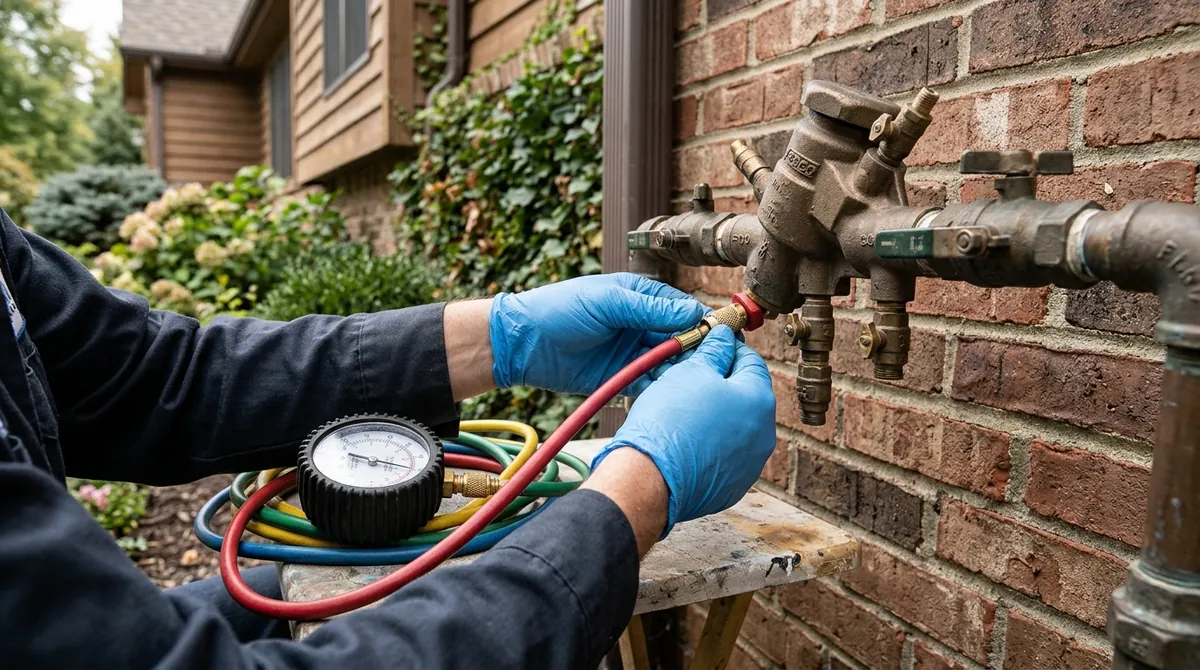
Water to the irrigation system is shut off for a short time during the test. Your household water usually stays on. A passing test on one device often takes under an hour.
Testing in winter
Most irrigation systems in West Michigan are drained and shut down in the fall so the lines do not freeze. A device that has been winterized usually cannot be tested until the system is turned back on in spring. If a notice arrives in late fall or winter, call your utility and ask about their deadline, then book the test for when the system is running again. Spring is the busy season for backflow tests, so booking early gives you time to fix a failed device before the deadline.
What decides the cost
We do not print one price for backflow work because the job changes with what we find. These are the things that set it:
- Number of devices. Each preventer is tested and reported on its own. Most homes have one.
- Device type. Some assemblies take longer to test than others.
- Pass or fail. A device that passes is the lowest cost visit. A failure adds repair parts or a new device.
- Repair parts. Seals, springs and check valve parts wear out and can often be rebuilt.
- Replacement. An old device, or one where parts are hard to get, can cost less to replace than to repair.
- Retesting. A repaired or new device is tested again before we sign the report.
- Access. A device buried in shrubs, behind a finished basement wall or in a flooded meter pit takes longer to reach.
You get a free estimate before any repair or replacement starts, so a failed test never turns into work you did not agree to.
What if your device fails?
A failed test is common on older devices, and it does not mean anyone has been drinking contaminated water. It means a part inside is no longer holding as well as it should.
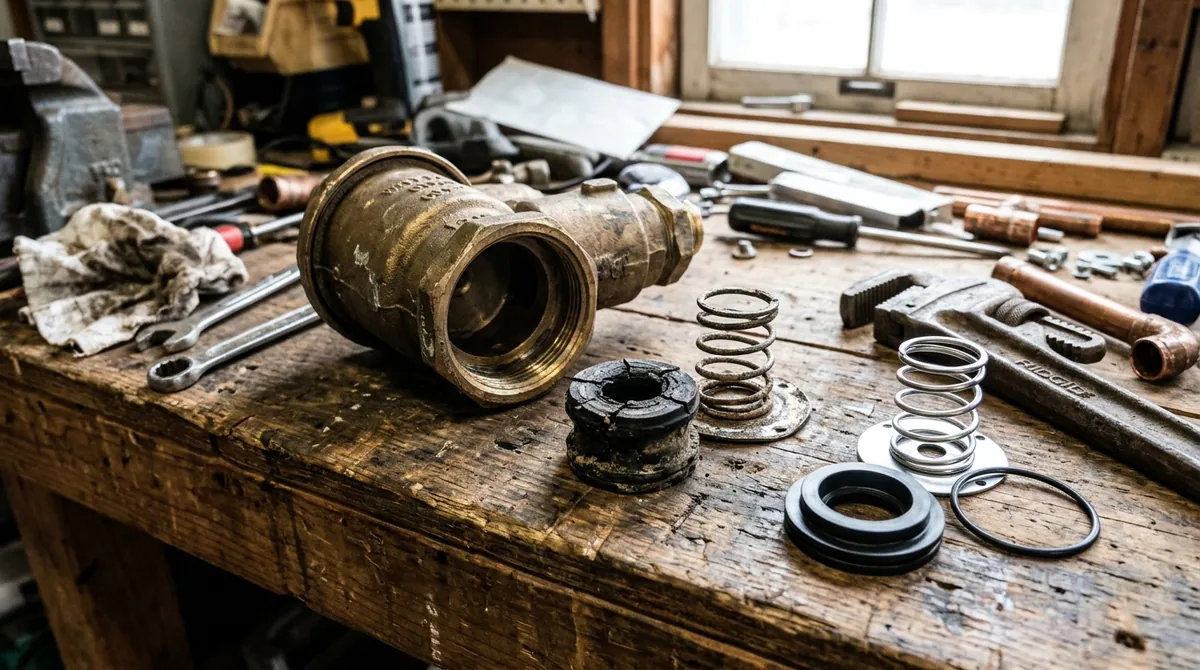
The usual causes are a worn rubber seal, a check valve that does not close fully because of grit or scale, or a relief valve that drips. We explain which one it is, give you the options and fix it once you decide. After a repair or replacement we retest the device so the report you send in is a passing one.
Do not ignore a failed test or a missed notice. Utilities can follow up with further notices and, if a device is left untested, may shut off water to the property. Book the test before the deadline and keep a copy of every report.
Adding irrigation or a sprinkler line?
A new lawn irrigation system needs a backflow preventer in place and passing before it goes into use. The same goes for an irrigation line added to a newer home in Hudsonville, Byron Center or another growing area. If you are planning irrigation, call us before the system is connected. We install the preventer, test it and complete the paperwork.
If you are also finishing a basement or remodeling, our remodel and new construction plumbing team can plan where the irrigation supply and the preventer will sit, so the device stays reachable for future tests.
A quick checklist before you call
Have these ready and the booking goes faster:
- the notice from your utility, including its deadline and any form it asks for,
- where the device is, if you know,
- whether the irrigation system is running or winterized, and
- the address the utility has on file for the property.
Book your backflow test with Eyk Plumbing
If a backflow notice has arrived, or you are not sure when your irrigation preventer was last tested, we can tell you what the test involves and book it before your deadline. See our backflow testing service or read about backflow testing in Grand Rapids.
Call Eyk Plumbing at (616) 655-4172 or contact us online to book your test. We answer calls 24/7.