The cost of sewer line work in Grand Rapids depends on what the camera finds, how long and deep the line is, whether it can be replaced without digging a trench, and what has to be restored afterwards. A single crack or root intrusion can often be repaired for far less than a full replacement. A line with several breaks, a collapse or heavy corrosion usually needs replacing.
Why sewer prices vary so much
Sewer work varies more than almost any other plumbing job. Two homes on the same street can need very different work. One line has a single root intrusion near the house. The next has a sagging section under the driveway and a crack at the street.
That is why a fair price comes after an inspection, not before it. Any number quoted without seeing inside the pipe is a guess. We give you a clear estimate after the camera inspection and before any digging starts.
Start with a camera inspection
A camera inspection is the first step and the best money you will spend on a sewer problem. We feed a small waterproof camera through the line and watch the pipe on a screen. It shows cracks, roots, offset joints, low spots and breaks, and it shows where they are.
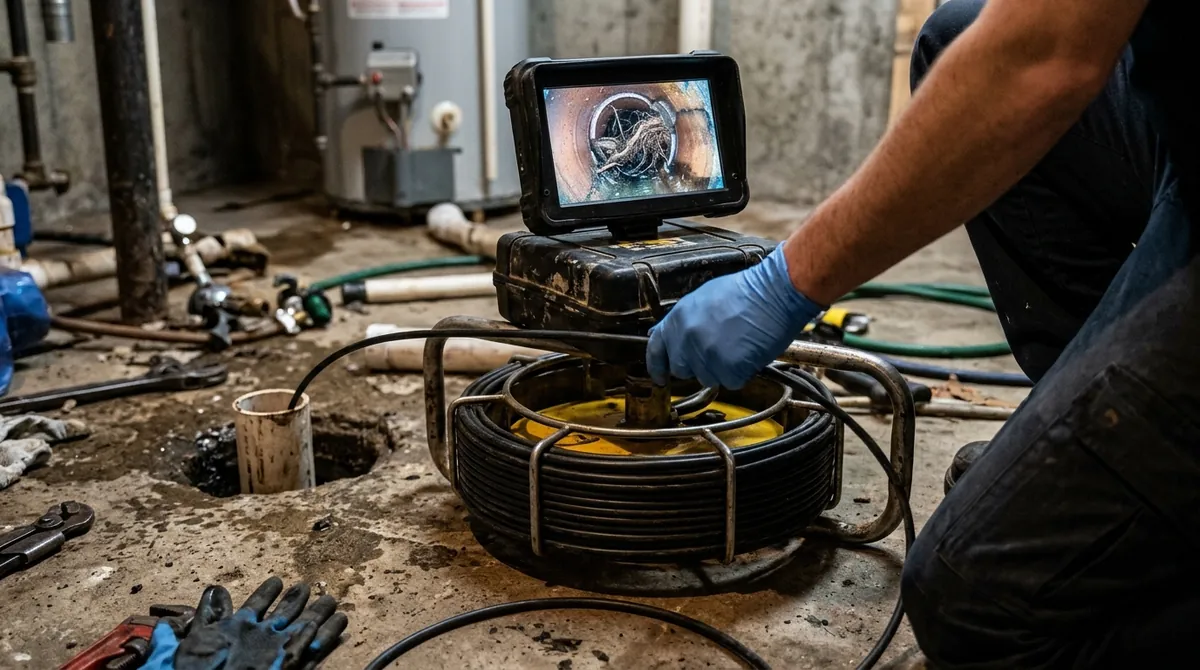
An inspection usually takes 30 to 60 minutes, and we show you the footage afterwards. You see what we see before you decide anything. That matters, because the footage is what decides between a repair and a replacement, and that decision is the biggest single factor in the cost.
Repair or replace: how the footage decides it
When a repair makes sense
A repair makes sense when the damage is limited to one spot and the rest of the pipe is sound. Common examples:
- a single crack or broken joint,
- one root intrusion at a joint,
- a short damaged section near the house or the street.
A spot repair often takes a day. It costs less because less pipe is replaced and less ground is opened.
When replacement is the answer
Replacement is usually the better value when the camera shows:
- several problem areas along the line,
- a collapsed or crushed section,
- heavy corrosion in cast iron pipe,
- a belly, where a section has sagged and holds water and waste, or
- repeat root problems along the whole run.
Repairing one spot on a line like that buys time, but the next failure is already in the footage. A full replacement typically takes one to three days, depending on the length of the line and the method.
The things that set the price
Line length
A longer run from the house to the street costs more to repair or replace. Homes set back from the road, or with the connection on the far side of the street, have longer lines.
Depth
Deeper lines mean more digging or a bigger setup for trenchless work. Depth varies with the age of the home and how the street sewer was laid.
Extent of damage
One crack costs less than a line with several problem areas. The camera footage shows which you have.
Method
Trenchless replacement and traditional digging cost differently. The next section explains how.
Surface restoration
Lawns, driveways, walkways and landscaping over the line add to the finished price if they have to be opened and restored.
Trenchless or digging: how the method changes the cost
Traditional replacement digs a trench along the length of the line, removes the old pipe and lays a new one. It works in almost any situation, but it opens up everything above the pipe.
Trenchless methods, such as pipe bursting or lining, replace or reline the pipe through small access pits. Pipe bursting pulls a new pipe through the path of the old one and breaks the old pipe apart as it goes. Lining forms a new pipe inside the old one.
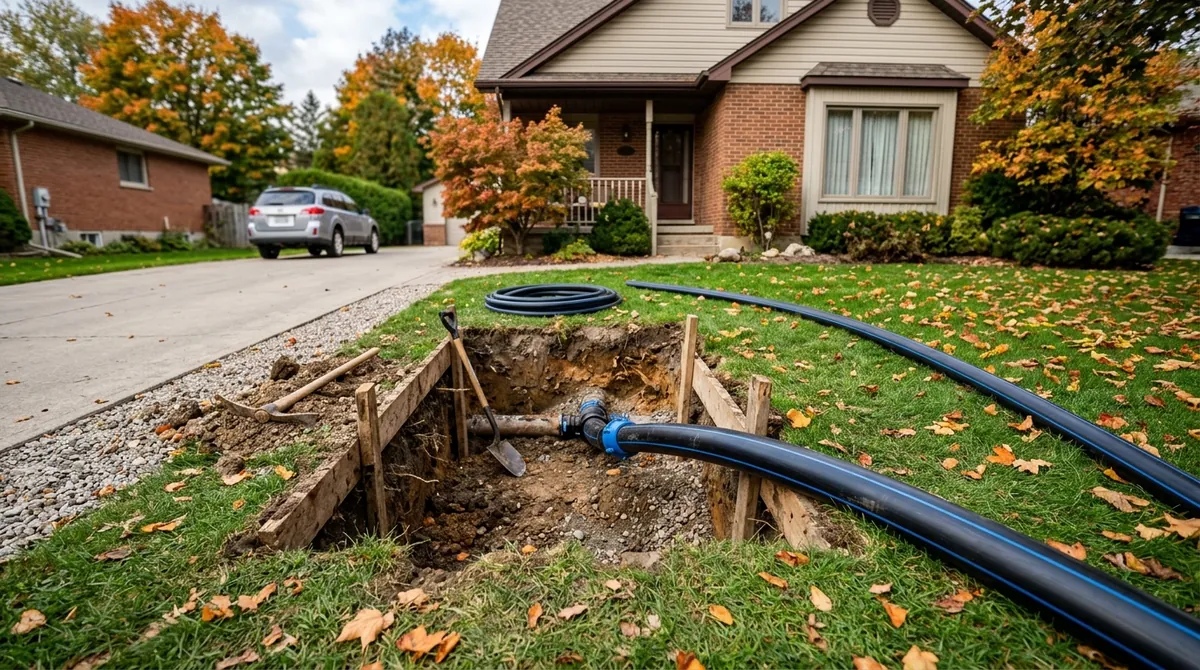
Trenchless work may cost differently from digging, but it usually spares driveways, patios and landscaping. When the line runs under a driveway or a mature garden, the savings on restoration can change the comparison. Trenchless is not possible on every property, so we tell you during the inspection whether yours is a good candidate.
Who pays for which part of the line?
In most West Michigan communities, the homeowner owns the sewer line from the house to the city connection. East Grand Rapids, for example, tells residents they are responsible for sanitary sewer lines from the home to, and including, the connection to the city main, including repairs under the street. It also advises having laterals regularly inspected by a licensed plumber.
The exact dividing point varies by city and township. Check with yours before work starts, since some require a permit for sewer work. If part of the line sits under a public street or sidewalk, restoring that surface can add to the cost.
Many rural homes around Cedar Springs, Sparta and Byron Center use septic systems instead of a municipal sewer. Tell us how your home is connected when you call, so we bring the right equipment.
Why older Grand Rapids homes see more sewer problems
Older neighborhoods in Grand Rapids and the first-ring cities often have clay or cast iron sewer lines. Clay pipe comes in short sections with many joints, and roots find their way into those joints. Cast iron corrodes from the inside over decades.
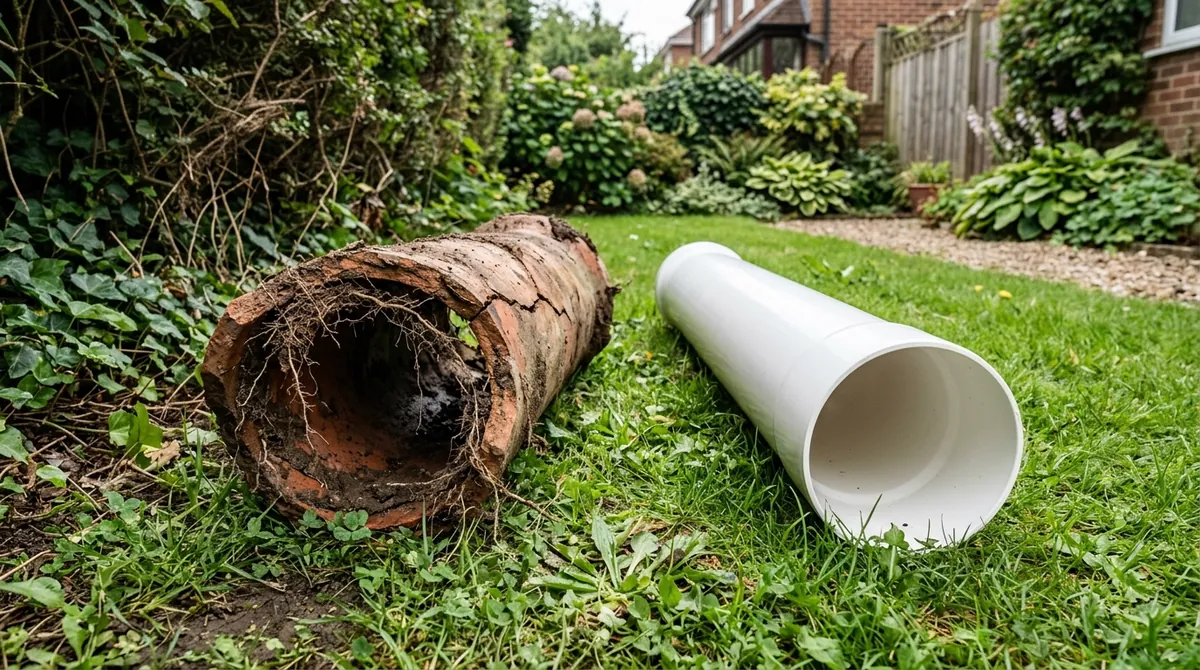
Newer subdivisions use plastic pipe, which resists roots and corrosion. Settling after construction can still create low spots, so a newer home is not immune.
Signs your sewer line needs attention now
Waiting usually makes sewer work more expensive, because a partial blockage can become a backup into the basement. Call for an inspection if you notice:
- more than one drain backing up at once,
- gurgling from toilets or drains,
- a sewage smell in the yard or basement,
- a soggy or unusually green patch of lawn over the line, or
- repeat clogs that snaking does not fix.
If a single drain is slow, the problem is often closer to the fixture. Our guide to preventing clogged drains covers the everyday causes, and our drain cleaning service handles the ones that need a plumber.
How long does sewer line work take?
Timing is part of the cost, because a household without a working sewer line cannot use its drains. Here is what to expect:
- Camera inspection: about 30 to 60 minutes.
- Spot repair: often a day, for a single crack or a short damaged section.
- Full replacement: typically one to three days, depending on the line length and the method.
- Cleanup and restoration: the same visit or the next.
Weather and ground conditions can change those windows. Frozen ground in a Michigan winter makes digging slower, and wet spring soil can do the same. We give you a realistic window before the work starts, and we confirm the line is flowing before we leave.
How to compare sewer line quotes
A good sewer quote is specific. Look for:
- what the camera found, and where along the line,
- whether the quote is for a repair or a full replacement,
- the method: trenchless or open trench,
- the length of pipe being repaired or replaced,
- surface restoration: what is included and what is not,
- permits, if your city or township requires one, and
- cleanup when the work is done.
Compare like with like. A spot repair and a full replacement are not the same job. If a quote is far lower than the others, ask whether it covers the whole problem the camera showed or only part of it.
Ask to see the footage
Ask to see the inspection footage behind any quote. A plumber who shows you the inside of your pipe is giving you the same information they used to price the job.
Talk to Eyk Plumbing About Your Sewer Line
If more than one drain is slowing down or you smell sewage outside, a camera inspection tells you what is going on and what it will take to fix. See our sewer line repair and replacement services or read about sewer line repair in Grand Rapids.
Call Eyk Plumbing at (616) 655-4172 or contact us online to set up a camera inspection.